

When the Meeting Room Understands the Meeting
Share


Inside the Experience of the DTEN D7X AI
Walk into a typical meeting room and the technology is easy to spot. There’s a display on the wall. A camera above or below it. Microphones on the table. Maybe a separate compute device tucked behind the screen. Everything works, but it still feels like a collection of components rather than a single system designed to support how people actually collaborate.
That’s starting to change.
With the introduction of the DTEN D7X AI, the meeting room itself begins to act more like an intelligent collaboration environment, adapting automatically to the people, conversations, and work happening inside it. To understand the difference in what AI video conferencing brings to the table, it helps to look at what a meeting actually feels like.
The Meeting Begins
People enter the room. Some are in person. Others join remotely through Microsoft Teams or Zoom. With traditional systems, someone usually needs to adjust the camera, move microphones, or reposition participants so everyone can be seen and heard clearly.
With the DTEN D7X AI, the system handles those adjustments automatically.
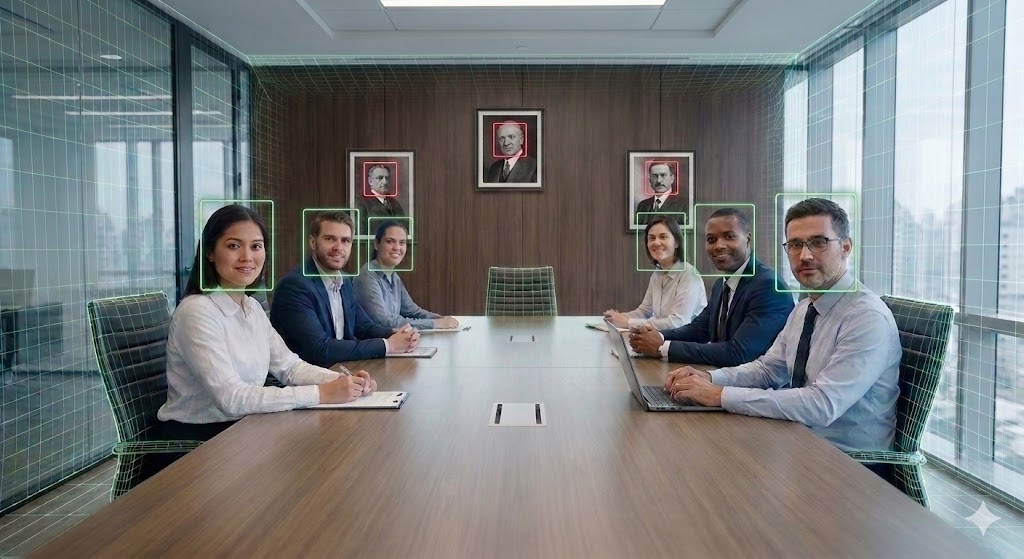
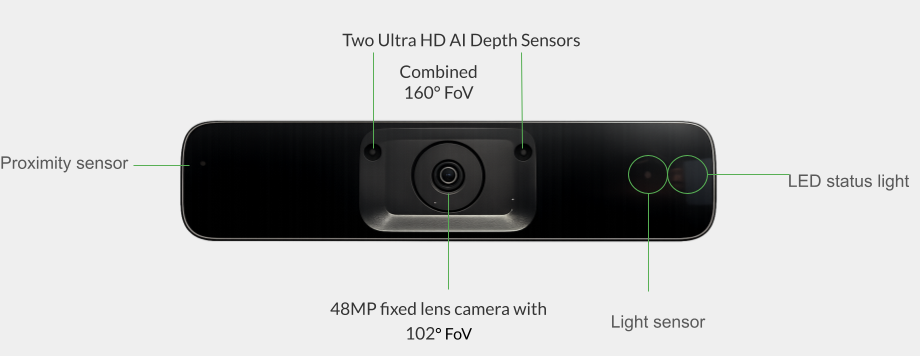
A 48MP center camera paired with dual AI depth sensors maps the room in three dimensions, identifying participants and dynamically adjusting framing as people move or speak. Instead of a static wide shot or manual controls, the camera adapts to the room in real time.
Remote participants see the conversation unfold naturally. And if someone happens to walk past the room’s glass wall, the system automatically removes them from to view to prevent distraction.
The Conversation Gets Moving
As the discussion progresses, participants shift in their chairs, lean back, stand up to present, or move toward the board. Audio systems often struggle at this point. Voices drop off when someone turns away from the microphone. Background noise creeps in. Someone inevitably asks, “Can you hear me?”
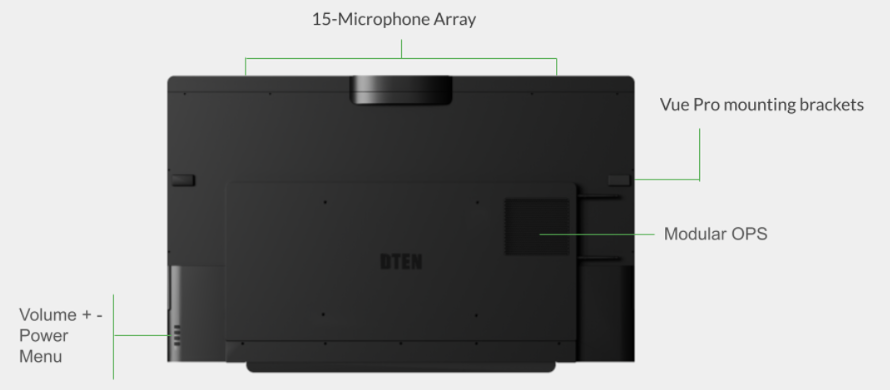
The D7X AI is designed to prevent that. A 15-element microphone array uses beamforming and voice pattern tracking to isolate speech at its source. Voices remain clear even as participants move around the room. Adaptive noise cancellation actively removes background distractions such as HVAC hum or side conversations.
The result is something simple but important. The meeting continues without interruption.
Ideas Move to the Board
Most meetings eventually shift from discussion to collaboration.
Someone walks up to the board to sketch an idea or outline a plan. In many rooms, that moment introduces friction. Writing can feel laggy or imprecise, and capturing the whiteboard for remote participants becomes difficult.
The DTEN D7X AI approaches this differently. Its 4K, 20-point capacitive touch display is designed for natural interaction, allowing participants to write, sketch, and annotate with a level of responsiveness closer to a tablet than a traditional display.
Built-in AI collaboration tools support shape recognition and content organization, while integration with Microsoft Whiteboard and Zoom Whiteboard allows ideas to be saved and shared instantly.
The board becomes a working surface rather than just a screen.
The Platform Behind the Experience
None of these capabilities exist in isolation. The D7X AI runs on Windows 11, providing native support for Microsoft Teams Rooms and Zoom Rooms while enabling emerging AI-driven meeting capabilities, including Microsoft Copilot experiences.
That foundation matters. As AI begins to play a larger role in meetings, from automated meeting summaries to speaker identification and action tracking, the meeting room system needs the compute and platform flexibility to support those evolving capabilities.
Windows provides that foundation while maintaining alignment with enterprise IT environments.
Designed for the Real World
Advanced collaboration technology works if it’s easy to deploy and manage. The all-in-one nature of the D7X AI means fast, simple deployment. It ships preconfigured and optimized so organizations can connect power and network and be meeting-ready within minutes. Connectivity options including Wi-Fi, Ethernet, and USB-C BYOD with touchback control support a wide range of environments.
On the management side, DTEN’s Orbit Management platform gives IT teams centralized visibility and control across their devices and locations.
For users, the experience is simple. Walk in. Start the meeting. Collaborate.
The Bigger Shift
The introduction of the D7X AI reflects a broader evolution in collaboration technology.
Meeting rooms are no longer just spaces equipped with video conferencing hardware. They are becoming integrated environments where video, audio, sensing, touch interaction, and AI work together as a single system.
Instead of reacting to what happens in the room, technology begins to understand it. That shift is still in its early stages, but it represents the direction collaboration spaces are heading.
The DTEN D7X AI is one of the first systems designed specifically for that future.
Related Posts
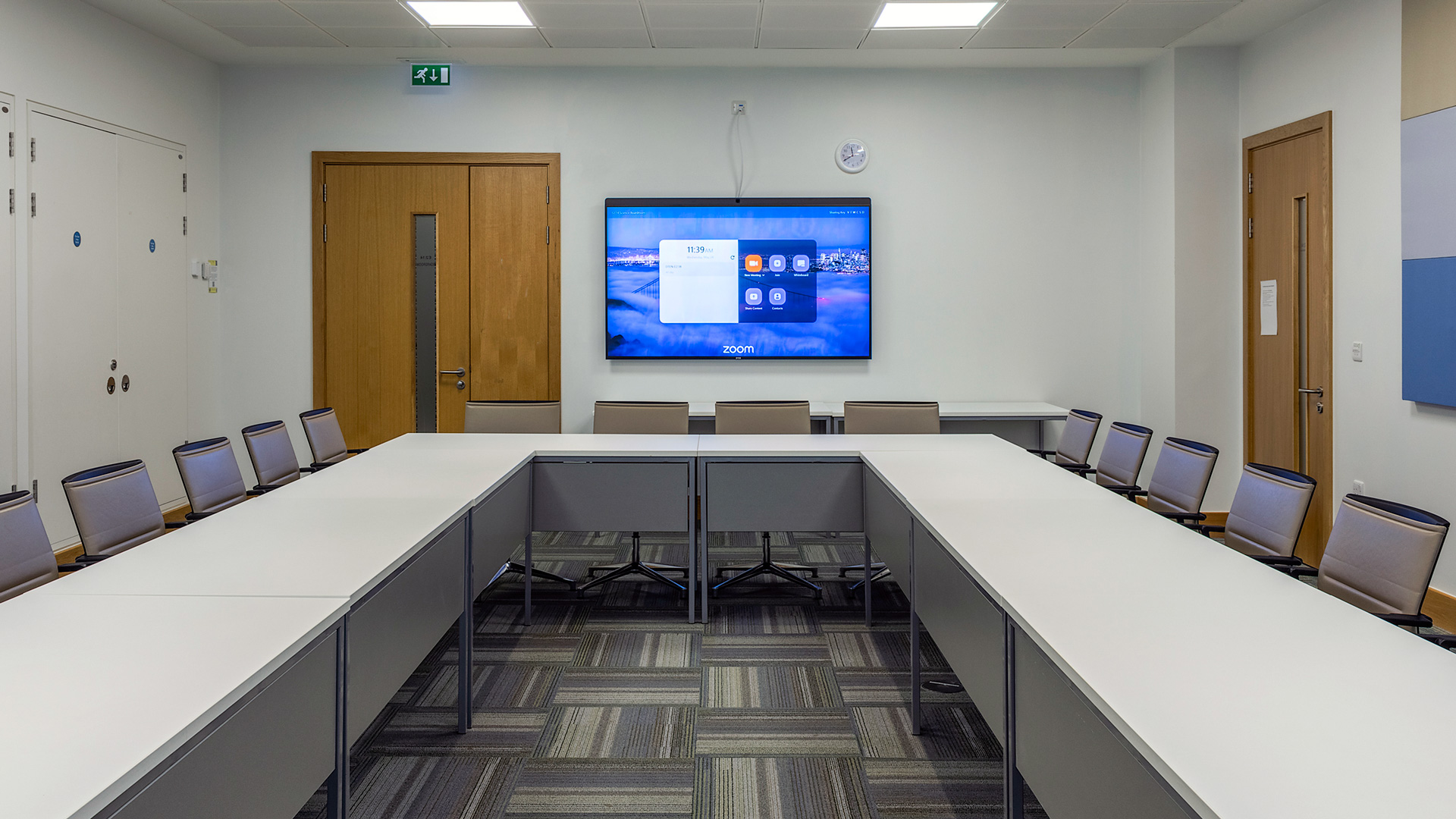
유럽 더블린 대학교(UCD)는 캠퍼스 전체에서 일관된 하이브리드 회의를 위해 DTEN을 표준으로 채택
유럽 더블린 대학교(UCD)는 캠퍼스 전체에서 일관된 하이브리드 회의를 위해 DTEN을 표준으로 채택